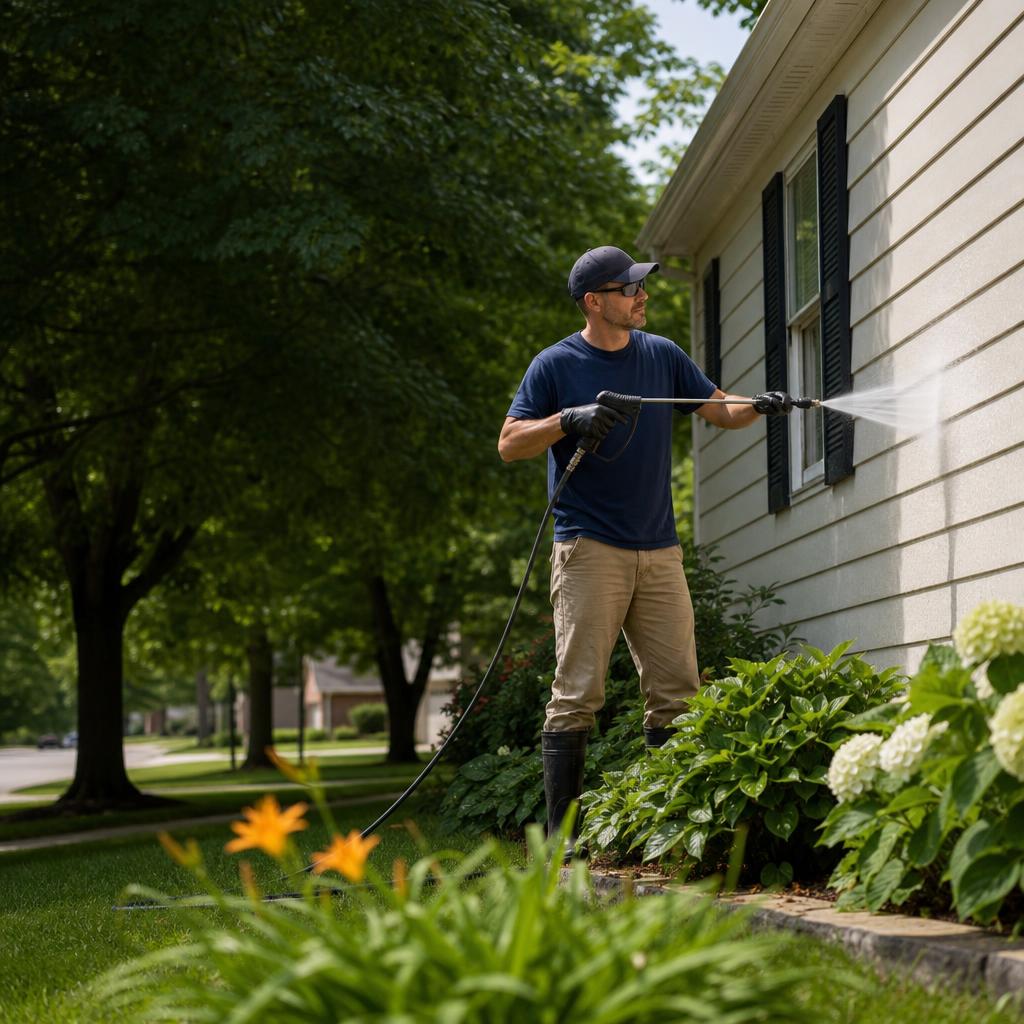
A poured concrete patio is the centerpiece of backyard living. In the spring and summer, it hosts weekend barbecues, patio dining sets, fire pits, and family gatherings. However, because concrete is an inherently porous, sponge-like masonry material exposed to the elements 365 days a year, a bright, clean slab can quickly turn into an eyesore.
Over the course of a humid Missouri summer and a wet, leaf-heavy autumn, concrete patios absorb everything that lands on them: slippery green algae, deep black mildew, brown oak leaf tannins, dripping burger grease from the grill, and orange rust rings from metal patio furniture.
Not every homeowner owns a commercial pressure washer—and as many discover the hard way, using a cheap consumer pressure washer wand often leaves permanent “zebra stripes” etched into the slab. That leads thousands of homeowners to ask: How do you clean a concrete patio without a pressure washer?
While scrubbing a concrete patio by hand requires specific chemical cleaners and a fair amount of physical elbow grease, you can successfully lift mild-to-moderate surface stains using the right chemistry for each specific stain type.
In this comprehensive guide, we will explain why concrete stains so easily, walk step-by-step through how to clean a concrete patio without a pressure washer, match the 6 most common backyard patio stains with their exact chemical neutralizers, and help you decide when a DIY scrub is enough—and when calling in a professional rotary surface cleaning crew is the smarter move.
Why Does Concrete Stain So Easily? (The Rigid Sponge Effect)
To clean concrete effectively without high pressure, you have to understand what concrete actually looks like beneath your feet.
Although a cured concrete patio feels rock-hard, it is actually permeated by millions of microscopic air pockets and interconnecting tunnels called capillaries. These capillaries form during the initial pour as excess mixing water rises to the top (“bleed water”) and evaporates into the air.
Because of this capillary network, unsealed concrete acts like a rigid stone sponge:
- Water and Organic Spores seep below the top crust, where shaded moisture allows green algae, moss, and black bacteria to anchor microscopic root structures inside the stone.
- Oils and Grease soak straight down into the dry pores, repelling ordinary water and garden hose rinses.
- Tannic Acid from wet autumn leaves and acorns leaches into the capillaries, dyeing the gray cement paste brown and orange.
When you don’t have a high-flow pressure washer to mechanically flush those pores, chemistry and dwell time must do the work of drawing the stain back up to the surface.
Essential Tools for Cleaning Concrete Without a Pressure Washer
Before mixing any cleaning solutions, put away soft kitchen brooms or household mop heads—they are far too soft to reach down into textured concrete broom finishes. Gather these five hardware store essentials:
- A Heavy-Duty Stiff-Bristle Deck Brush: Look for a brush block fitted with stiff synthetic nylon or palmyra bristles mounted on a long wooden or fiberglass handle. (Warning: Never use a steel or brass wire brush on concrete! Wire bristles shed microscopic metal shavings into the pores of the concrete that will oxidize and polka-dot your entire patio with permanent orange rust spots the next time it rains.)
- A 1-to-2-Gallon Pump Sprayer: Essential for applying liquid cleaners evenly across the slab without wasting solution.
- A High-Flow Garden Hose Brass Jet Nozzle: Since you aren’t using a pressure washer, you need a concentrated brass fireman-style nozzle on your garden hose to flush away loosened suds and dirty slurry.
- Personal Protective Equipment (PPE): Rubber boots with slip-resistant soles, chemical-resistant nitrile gloves, and wraparound eye protection.
- Plastic Sheeting or Pre-Wetting Hose: For protecting adjacent grass and flowerbeds from cleaning runoff.
Step-by-Step: How to Clean a Concrete Patio Without a Pressure Washer (General Maintenance Scrub)
If your concrete patio is generally dirty with winter grime, dusty patio footprints, and light green surface mildew, follow this 5-step manual restoration process:
Step 1: Clear and Dry-Sweep the Slab
Remove all patio tables, chairs, grill mats, ceramic planters, and outdoor rugs. (Dirty water trapped underneath a left-behind planter will leave a dark ring when the patio dries.) Use a stiff push broom to sweep away all loose dirt, acorns, pebbles, and dry leaves, and pull any weeds growing inside the expansion joints.
Step 2: Pre-Wet the Concrete and Surrounding Plants
With your garden hose, thoroughly soak the grass, hostas, and flowerbeds bordering your patio for 3 to 5 minutes. Filling the soil and plant roots with fresh water prevents them from absorbing soapy runoff. Mist the concrete patio itself so it is damp (not puddled), which keeps the dry slab from instantly drinking in your cleaner before you can scrub it.
Step 3: Mix and Apply an Oxygenated Bleach or Simple Green Solution
For eco-friendly general scrubbing without a pressure washer, Oxygenated Bleach (Sodium Percarbonate / OxiClean) is one of the best concrete patio cleaners available. When mixed with warm water, it releases oxygen bubbles that help lift dirt out of pores without harming adjacent turf.
- Mix 1 cup of powdered oxygen bleach per 1 gallon of warm water in a bucket or pump sprayer.
- Apply generously over a manageable 10×10-foot section of the patio.
Step 4: Respect the “Dwell Time” (Don’t Scrub Immediately!)
The #1 mistake DIYers make is scrubbing the second the cleaner hits the concrete. Let the cleaning solution sit (“dwell”) on the concrete for 15 to 20 minutes. Keep it damp by misting lightly if the sun starts drying it out. During this dwell window, the surfactant breaks the surface tension of the dirt and softens organic stains.
Step 5: Agitate in Cross-Hatch Patterns and Flush Thoroughly
Take your stiff-bristle nylon deck brush and scrub the wet section vigorously—first going North-to-South, then East-to-West to reach both sides of the concrete’s broom texture. Before the muddy foam can dry and settle back into the pores, blast the slurry off the edge of the patio using your garden hose jet nozzle.
The Ultimate Patio Stain Removal Guide: 6 Common Stains & How to Dissolve Them
A general soap scrub won’t touch deep oil drips, rust rings, or years of black mold. Because every stain has a different chemical composition, you must match the stain to its specific chemical opposite:
| Patio Stain Type | Visual Appearance | Active Chemical Solution | Why It Works |
|---|---|---|---|
| 1. Green Algae & Black Mold | Slippery green film or crusty black discoloration | Diluted Sodium Hypochlorite (Liquid Pool Shock / Bleach) + Surfactant | Kills living spore roots embedded inside concrete capillaries. |
| 2. Leaf, Acorn & Mulch Tannins | Tea-colored brown, orange, or purple leaf outlines | Sodium Hypochlorite + Baking Soda Poultice | Oxidizes and bleaches out organic tannic acid pigments. |
| 3. Grill Grease & Motor Oil | Dark, slick, water-repellent black/brown blotches | Alkaline Degreaser + Absorbent Poultice (Cat Litter / Baking Soda) | Emulsifies petroleum hydrocarbons and pulls oil upward out of pores. |
| 4. Rust & Fertilizer Stains | Bright orange rings (furniture feet) or tiny orange freckles | Oxalic Acid (Bar Keepers Friend) or Commercial Rust Dissolver | Chemically converts insoluble iron oxide into water-soluble iron. |
| 5. Efflorescence | Chalky, powdery white salt crust on the surface | Diluted White Vinegar or Buffered Mild Acid Cleaner | Dissolves alkaline calcium salts migrating out of the slab. |
| 6. Thick Green Moss & Lichen | Raised, velvety green pads or crusty gray circles | Boiling Water + Undiluted White Vinegar + Stiff Scraper | Destroys rhizoid anchors so moss lifts off cleanly. |
How to Remove Black Mold and Slippery Green Algae
If your patio sits on the shaded north or east side of your house, it likely turns green and slick every spring—or develops a deep, dingy black crust (Gloeocapsa magma bacteria and fungal mildew). Vinegar and dish soap take forever to kill deep black concrete mold.
- The Solution: Mix a 1:3 or 1:4 solution of household liquid bleach (or liquid pool shock, which is stronger sodium hypochlorite) and water inside a pump sprayer, adding a tablespoon of laundry detergent (never mix ammonia or dish soaps containing ammonia with bleach!).
- The Process: Pre-soak all surrounding grass thoroughly. Spray the bleach solution onto the black/green concrete and watch it turn brown and disappear within 10 to 15 minutes as the solution kills the algae at the cellular level. Scrub lightly with your deck brush and rinse thoroughly with your garden hose for 5 full minutes to dilute all runoff.
How to Remove Brown Leaf, Acorn, and Walnut Tannin Stains
Across St. Charles and St. Louis counties, mature oak, maple, hickory, and black walnut trees drop wet leaves and nuts onto back patios every fall. As rain sits on those leaves, tannic acid leaches out, leaving perfect brown leaf silhouettes dyed into the concrete.
- The Solution: Tannins are organic dyes. A 50/50 mix of household bleach and water (or a thick paste of Oxygen Bleach + Trisodium Phosphate [TSP] substitute) oxidizes the organic tannin pigment. Let it dwell for 15 minutes, scrub with a stiff nylon brush, and rinse clean.
How to Remove BBQ Grill Grease, Food Oil, and Automotive Fluid
If grease drips off your smoker or grill without a protective mat beneath it, the warm lipid oil penetrates deep into the concrete pores. Because oil and water don’t mix, spraying it with water does nothing.
- For Fresh Spills: Cover the spot immediately with a thick mound of unscented clay cat litter, cornstarch, or baking soda and stomp it in to absorb surface oil. Sweep away after 2 hours.
- For Set-In Grease Stains (The Poultice Method): Pour undiluted commercial alkaline concrete degreaser (or heavy-duty Dawn Platinum) over the stain, scrub vigorously with a stiff nylon brush and boiling hot water, then cover the wet spot with a paste of baking soda and acetone (or powdered laundry detergent) covered by plastic wrap taped at the edges. As the poultice dries over 24 hours, it sucks the deep oil upward out of the concrete capillaries.
How to Remove Orange Rust Rings and Lawn Fertilizer Spots
Did a wrought-iron patio chair leg, metal umbrella base, or stray granules of iron-rich lawn fertilizer leave bright orange rust stains on your patio? Never put bleach on rust! Bleach reacts with iron oxide and permanently sets the orange stain deeper into the concrete.
- The Solution: Rust requires an acidic reducer—specifically Oxalic Acid (the active ingredient in Bar Keepers Friend powder) or a dedicated professional rust remover like F9 BARC.
- The Process: Wet the rust stain, sprinkle Bar Keepers Friend powder over the orange area, and scrub it into a foaming paste with a damp nylon brush. Let it sit for 5 to 10 minutes (no longer, or the acid may lighten the surrounding concrete), scrub again, and flush thoroughly with fresh water.
4 Concrete Cleaning Mistakes That Can Ruin Your Patio
When cleaning concrete by hand, avoid these four common DIY traps that permanently scar residential hardscaping:
-
Muriatic Acid Washes: Muriatic (hydrochloric) acid dissolves the smooth top layer of Portland cement (“the cream”), turning your patio rough, sandy, and discolored while exposing underlying gravel aggregate.
-
Metal Wire Brushes: Steel wire bristles break off inside microscopic concrete pores and oxidize into permanent orange rust speckles across the entire slab.
-
Bleach on Rust Stains: Sodium hypochlorite chemically reacts with iron oxide to lock orange furniture and fertilizer rust stains permanently into the stone.
-
Letting Dirty Suds Dry in Midday Sun: Cleaning on a hot 95°F afternoon causes dirty soap slurry to flash-dry before you can rinse it, locking liquefied grime right back into the pores.
A Note on Stamped Concrete: If you have a decorative stamped and colored concrete patio, avoid harsh degreasers, strong acids, or acetone, which will strip and cloud the clear acrylic sealer protecting the decorative color release.
The Honest Truth: DIY Hand-Scrubbing vs. Professional Rotary Concrete Cleaning
Can you clean a concrete patio without a pressure washer? Yes—especially for localized stains, small stoops, or seasonal touch-ups.
However, if you have a 300- to 800-square-foot backyard patio covered in years of embedded black algae, deep pore dirt, and heavy leaf stains, scrubbing it on your hands and knees with a deck brush and a garden hose has two major limitations:
- The Physical Labor Toll: Scrubbing every square inch of a 500-square-foot patio by hand takes 4 to 6 hours of grueling back and shoulder work.
- Surface Cleaning vs. Deep-Pore Flushing: A garden hose puts out roughly 40 to 60 PSI. While chemical scrubbing cleans the top surface of the concrete, a garden hose lacks the mechanical lift required to flush compacted black dirt out from the bottom of the concrete capillaries. Within a few months of summer rain, that trapped sub-surface dirt wicks back up to the top.
How Professional Concrete Patio Cleaning Works (Without Wand Marks!)
When you hire a professional exterior cleaning company like Vossome Window Cleaning, we don’t attack your patio with an uneven handheld pressure wand that leaves squiggly zebra stripes. Instead, we use a 3-Stage Commercial Rotary Surface Restoration Process:
What takes a homeowner an entire exhausting Saturday with a deck brush and buckets of cleaner takes our commercial 8-GPM rotary equipment less than 45 to 60 minutes—leaving the entire concrete slab uniformly bright, sanitized deep down in the pores, and 100% streak-free.
How to Keep Your Concrete Patio Clean Longer
Once your concrete patio is spotless—whether you scrubbed it yourself or had it professionally restored—use these three preventative habits to keep stains away:
- Place a Grill Splatter Mat Under Your BBQ or Smoker: A $25 heavy-duty silicone or fiberglass grill mat catches every drop of burger grease and marinade before it can touch your porous concrete.
- Swap Metal Furniture Glides for Plastic or Rubber Feet: Check the bottom of wrought-iron or steel patio chairs and umbrella stands. Replacing rusted metal glides with $5 nylon caps eliminates orange rust rings forever.
- Blow Off Wet Leaves Promptly in the Fall: Don’t let wet oak leaves or acorns sit on your patio for weeks in October and November, and keep your overhead gutters clean so acidic leaf-tea overflow doesn’t cascade onto the slab. A 2-minute pass with a cordless leaf blower prevents dark brown tannin silhouettes from dyeing the concrete.
Frequently Asked Questions (FAQ)
Does vinegar clean concrete patios well?
Household white vinegar is mildly acidic (5% acetic acid), making it useful for dissolving chalky white mineral deposits (efflorescence) or killing small patches of weeds and moss between patio slabs. However, vinegar is ineffective at removing large areas of black mold, green algae, or oil stains, and using large volumes of strong Horticultural Vinegar (20%–30% acid) can slowly etch the cement paste of your patio.
Can I use Dawn dish soap to clean my concrete patio?
Dawn dish soap mixed with warm water is great for washing away loose surface dust, pollen, and fresh food spills during routine upkeep. However, dish soap alone will not kill embedded black mildew roots or bleach out dark brown leaf tannins—you will need an oxygenated bleach or sodium hypochlorite solution for organic discoloration.
Why did my concrete patio turn black over time?
When a concrete patio turns dark gray or black, it isn’t actually “dirt.” It is a hardy, photosynthetic cyanobacteria called Gloeocapsa magma mixed with fungal mildew spores that feed on moisture and the limestone minerals inside the concrete. Because these organisms anchor inside the microscopic pores of the concrete, they must be neutralized with an algaecide or soft-wash solution combined with deep pore flushing.
How much does professional concrete patio cleaning cost?
Having your concrete patio professionally pre-treated, cleaned with a commercial rotary surface cleaner, and post-treated typically costs between $125 and $250 for an average backyard patio ($0.15 to $0.40 per square foot; at Vossome Window Cleaning our flat surface rate is 40¢ per square foot)—and even less when bundled with a house soft wash or window cleaning!
Save Your Back and Restore Your Patio with Vossome Window Cleaning
Before you spend your entire weekend scrubbing concrete on your hands and knees—or risk etching permanent zebra stripes into your slab with a rented pressure washer—let our concrete restoration pros handle the heavy lifting!
At Vossome Window Cleaning, we specialize in Concrete Patio Cleaning, Driveway Pressure Washing, Low-Pressure House Soft Washing, Gutter Cleaning, and Pure-Water Window Cleaning across St. Charles County, St. Louis County, and surrounding communities, including O’Fallon, St. Peters, Wentzville, Chesterfield, and Lake St. Louis.
Our commercial rotary surface cleaners and biodegradable treatments lift away years of black mold, slippery green algae, and stubborn leaf stains in under an hour—leaving your backyard patio ready for entertaining!