Winter in the Midwest is relentless on residential properties. Between December and March, your home’s exterior endures freezing rain, heavy snow loads, sub-zero wind chills, de-icing road salts, and dozens of rapid freeze-thaw cycles. By the time the first warm breezes of April arrive in St. Charles and St. Louis counties, your home is often wearing a dull coat of gray winter grime, green north-side algae, clogged gutter debris, and cloudy window film.
While most homeowners instinctively think of “spring cleaning” as decluttering closets and dusting ceiling fans indoors, the most critical maintenance happens outside. Addressing minor winter wear and organic buildup in the spring prevents costly structural water damage during heavy May thunderstorms and prepares your outdoor living spaces for summer entertaining.
To help you tackle your property methodically—from the top of your roof ridge down to the concrete driveway—we have created the ultimate spring exterior home maintenance checklist, complete with an ideal timeline and pro tips on the exact order to schedule your exterior cleaning services.
Why the Order of Your Spring Exterior Cleaning Matters
Before grabbing a ladder or calling a contractor, there is one golden rule every homeowner should know: Always work from the top down and from the dirtiest tasks to the cleanest.
Many homeowners make the mistake of spending a full weekend washing their exterior windows in early April, only to flush their clogged gutters or pressure wash their patio two weeks later—splattering dirty roof runoff and airborne mist right back onto the clean glass.
When you follow this top-down sequence—or bundle all four services into a single coordinated visit with a full-service team like Vossome Window Cleaning—every surface stays spotless without duplicating effort.
Phase 1: Roofline, Gutters, and Downspouts
Your roof and gutter system are your home’s primary defense against spring flash floods and foundation leaks. In Missouri, April and May bring some of the heaviest rainfalls of the year—averaging 4 to 5 inches of rain per month. Every 1 inch of rain falling on a standard 2,000-square-foot roof generates 1,250 gallons of water that must exit cleanly through your downspouts.
1. Clear Late-Fall Leaves and Spring Tree Tassels from Gutters
Even if you cleaned your gutters last November, winter windstorms blow late-clinging oak leaves, pine needles, brittle twigs, and loosened asphalt shingle granules into your troughs. Worse yet, in April and May, oak trees drop millions of stringy catkins (“tassels”) and maple trees shed thousands of winged “helicopter” seeds (samaras).
These small spring seeds slip past standard leaf guards, mat together into a dense felt-like plug right inside the downspout elbow, and cause sudden gutter waterfalls and foundation leaks during spring storms.
2. Hydro-Flush Every Downspout and Check Underground Drains
Scooping out the horizontal gutter trough is only half the battle. Run a high-volume hose down every vertical downspout to confirm water exits at full force at the bottom. If your downspouts connect into black corrugated underground drainage pipes, verify that the pop-up emitters in your yard are opening freely and haven’t been buried under spring mulch or turf.
3. Inspect Fascia Boards, Soffits, and Miter Corners
While inspecting the gutter line, look for signs of winter ice dam stress:
- Pulled Hangers or Sagging Troughs: Heavy winter ice can bend aluminum troughs downward or pull old ferrule spikes loose from the wooden fascia board.
- Peeling Paint or Soft Wood on Fascia/Soffits: Indicates water has been sloshing over the back lip of a clogged gutter.
- Leaking Corner Miters: Winter freeze-thaw expansion often cracks old seam sealer at 90-degree gutter corners, causing annoying drips over walkways and decks.
4. Perform a Ground-Level Roof Binocular Inspection
Stand across the street or in your backyard with a pair of binoculars and scan your roof slopes:
- Look for lifted, curled, or missing asphalt shingles caused by winter wind gusts.
- Check metal flashing around chimneys, skylights, and plumbing vent boots for rust or gaps.
- Look for black streaks (Gloeocapsa magma bacteria) or green moss cushions growing on shaded northern roof slopes. (Never pressure wash a roof; roof moss and black streaks must be treated exclusively with low-pressure chemical soft washing.)
Phase 2: Exterior Siding, Brick, and Trim (The Spring Soft Wash)
As daytime temperatures climb into the 60s and 70s and spring humidity rises, dormant spores on your home’s exterior wake up and multiply rapidly.
- North & East Walls: Green Algae (Thrives in cool morning shade & condensation dew)
- Eaves & Porch Ceilings: Spider Webs, Mud Dauber Nests & Paper Wasp Starters
- Whole Exterior Envelope: Sticky Yellow Tree Pollen & Gray Winter Road Soot
- Lower Mulch Bed Line: Artillery Fungus (Tiny black tar-like spore dots shot from rotting mulch)
5. Soft Wash Vinyl, Brick, Stucco, or Hardie Siding
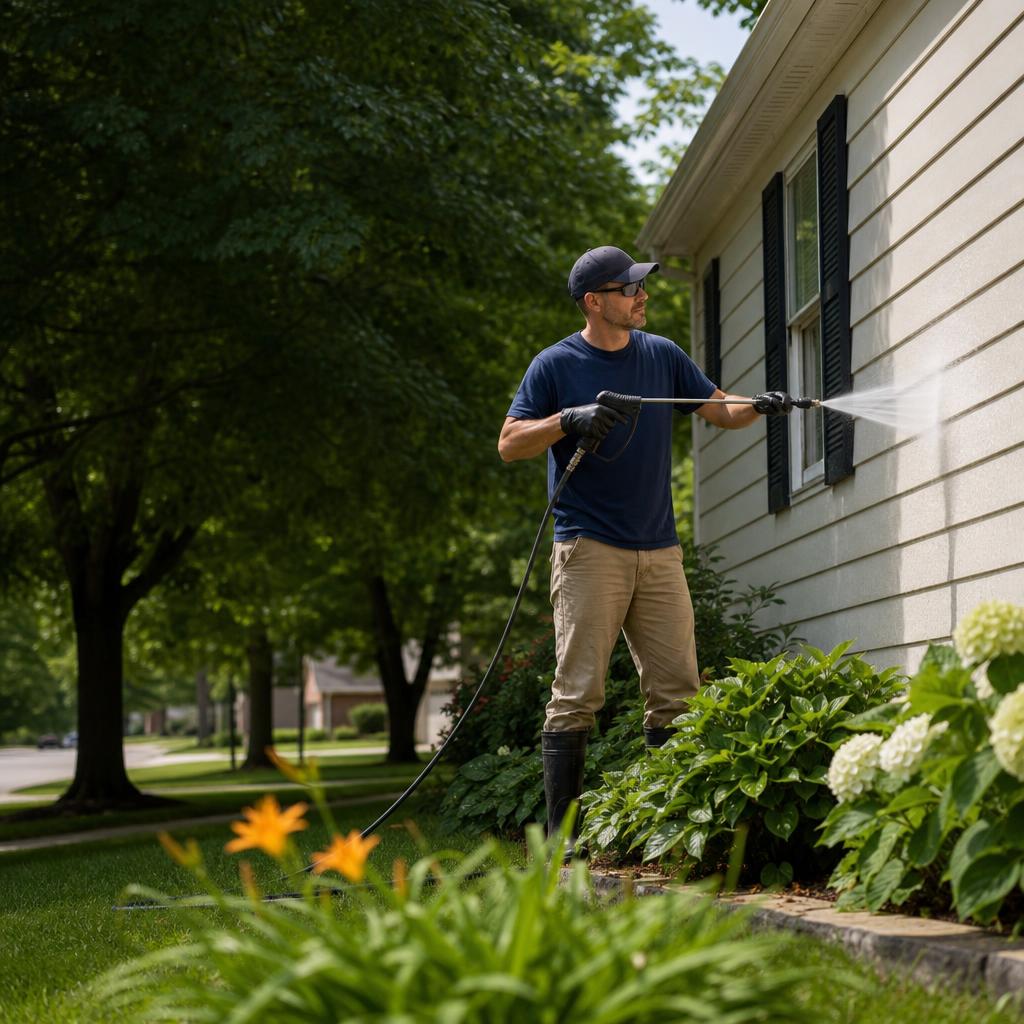
Spring is the single best time of year to have your home’s exterior professionally soft washed. Unlike high-pressure washing—which forces water behind vinyl siding overlaps, strips paint, and leaves permanent wand scars on oxidized panels—low-pressure house soft washing (60–150 PSI) uses biodegradable surfactants and algaecides to:
- Kill green algae, black mildew, and fungal spores at the cellular root so they don’t bloom all summer.
- Dissolve sticky yellow pine and oak pollen before summer heat bakes it onto your paint and trim.
- Wash away winter spider webs, insect cocoons, and stains tucked inside soffit vents and porch ceilings.
6. Inspect Exterior Caulking and Weatherstripping
After your siding is clean, walk the perimeter and inspect the flexible caulk joints around window frames, door trim, hose bibs, and where siding meets masonry brick or stone. Winter freezing shrinks caulk beads, opening up hairline cracks where wind-driven spring rain and insects can enter your wall cavities. Scrape away brittle, split caulk and apply a fresh bead of paintable 100% silicone or high-grade elastomeric exterior sealant.
7. Check Foundation Vents and Mulch Clearance
Before laying down fresh spring hardwood mulch in your flowerbeds, check the gap between the soil/mulch line and the bottom of your house siding. Keep mulch pulled back at least 4 to 6 inches below your wood or vinyl siding and brick weep holes. Piling wet spring mulch directly against siding traps moisture against the sill plate, invites subterranean termites, and breeds artillery fungus—a mushroom-like fungus in rotting wood mulch that shoots tiny, permanent black tar specks up onto the lower four feet of your white siding and windows!
Phase 3: Concrete Patios, Driveways, and Walkways
Nothing ruins the excitement of setting up your backyard patio furniture in May faster than realizing your concrete slab is dark gray, slick with green moss, and tattooed with brown oak leaf outlines from last autumn.
8. Deep Clean Concrete Patios, Pool Decks, and Sidewalks
Winter moisture trapped underneath snow piles and rotting autumn leaves turns unsealed concrete into a breeding ground for slippery green algae and black bacteria.
- The Safety Factor: Wet green algae on a shaded front walkway, pool deck, or back patio steps is as slick as ice, creating a major slip-and-fall hazard for children, guests, and delivery drivers.
- The Professional Approach: Have your concrete driveway, walkways, and back patio pre-treated with a mold-killing surfactant and cleaned with a commercial high-flow rotary surface cleaner. This flushes winter road salt, embedded mud, and brown leaf tannins out of the deep capillary pores of the concrete without etching the cream layer or leaving handheld wand “zebra stripes.”
9. Inspect Expansion Joints and Seal Vulnerable Slabs
Once your concrete driveway and patio are clean and bone-dry, inspect the control joints (the straight grooves cut into the slab) and the expansion joint where the patio meets your house foundation wall:
- If weeds are sprouting through the cracks, pull them by the root and fill open concrete joints with self-leveling polyurethane concrete joint sealant (such as Sikaflex). Sealing that gap stops rainwater from washing out the gravel sub-base underneath your slab.
- Consider applying a breathable, penetrating silane-siloxane concrete sealer every 2 to 3 years after your spring pressure wash to lock out summer BBQ grease drips and future winter salt damage.
Phase 4: Windows, Screens, Tracks, and Skylights
With the gutters flushed, the siding soft washed, and the concrete patio restored, it is time for the crowning jewel of your spring maintenance checklist: crystal-clear windows.
- Deep Wash Window Screens → Removes trapped spring pollen & winter soot
- Vacuum & Scrub Sill Tracks → Clears dead overwintering bugs & opens weep holes
- Pure-Water Exterior Wash → 000-PPM deionized rinse leaves ZERO mineral spots
- Hand-Squeegee Interiors → Erases winter fireplace, candle & cooking film
10. Wash Window Screens Before Opening Windows for Fresh Air
During winter, exterior window screens act like air filters—trapping road salt dust, soot, cobwebs, and early spring tree pollen in the fiberglass mesh. If you open your windows on a warm May morning without washing the screens first, the breeze blows that trapped pollen straight into your home (triggering spring allergies), and the first rain shower washes muddy streaks through the dirty screen right onto your glass.
11. Detail Window Tracks, Sills, and “Weep Holes”
Slide open your lower window sashes and look down into the vinyl or aluminum tracks. You will likely find a crust of dead overwintering boxelder bugs, ladybugs, stink bugs, black mildew, and gritty dirt.
More importantly, look at the outside bottom lip of your vinyl window frames for small rectangular slots called weep holes. These tiny drainage channels allow water that collects in the track during a storm to drain safely outside. If weep holes get plugged with dirt and dead bugs, rainwater backs up over the interior lip of the track and rots your interior drywall windowsill!
12. Schedule an Interior & Exterior Pure-Water Window Cleaning
All winter long, your interior glass collects a subtle, hazy film from furnace air circulation, gas fireplaces, holiday candles, cooking oils, and pet smudges, while your exterior glass is coated in winter grime and spring pollen.
Professional window cleaning using 000-PPM Reverse Osmosis / Deionized (RO/DI) pure water lifts every trace of winter film from high second- and third-story glass, skylights, and sunroom panes, drying completely spot-free so natural spring sunlight floods your home.
13. Check and Adjust Lawn Sprinkler Heads (Prevent Hard Water Stains!)
When you turn on your underground lawn irrigation system for the first time in May, run a 2-minute test cycle on every zone while walking around your house. Make sure no pop-up rotary heads have shifted during winter ground freezes to spray directly against your newly cleaned lower windows! Mineral-heavy Missouri tap water baking on glass in the summer sun creates permanent calcified hard water stains within weeks.
Master Printable Summary: Your Spring Exterior Maintenance Schedule
Want to organize your spring weekends efficiently? Here is the chronological roadmap from March through May:
| Timing Window | Priority Checklist Items | DIY or Hire a Pro? |
|---|---|---|
| Early Spring (March – Early April) |
• Walk property for winter roof/siding storm damage • Turn on exterior water spigots & check for frost leaks • Trim tree branches 6–10 ft back from roofline • Clear matted winter leaves from yard & patio |
DIY Inspection |
| Mid-Spring (Mid-April – Early May) |
• Soft Wash House Siding (erase green winter algae) • Pressure Wash Concrete Patio, Walkway & Driveway • Re-caulk split exterior window/door trim joints • Keep fresh spring mulch 4–6″ below siding line |
Hire Pro (Prevents siding & concrete damage) |
| Late Spring (Mid-May – Early June) |
• Clean Gutters & Flush Downspouts (after oak tassels & maple seeds finish dropping!) • Interior & Exterior Window + Screen Cleaning • Test & adjust lawn sprinkler heads away from glass |
Hire Pro (Safe ladder work + spot-free glass) |
DIY vs. Bundling With a Professional Exterior Cleaning Team
If you attempted to complete every major cleaning task on this spring checklist yourself—scooping two-story gutters from a ladder, scrubbing your house siding, pressure washing your driveway and back patio, and washing 30 windows inside and out—it would easily consume three to four entire spring weekends (25 to 35 hours of exhausting physical labor) and require hundreds of dollars in rental equipment and cleaners.
By hiring a professional multi-service company that specializes in all four pillars of exterior maintenance—Gutter Cleaning, House Soft Washing, Concrete Patio Pressure Washing, and Window Cleaning—an experienced crew can complete your entire property overhaul in a single afternoon:
- One Appointment, Zero Hassle: No coordinating three different contractors on three different days.
- Correct Top-to-Bottom Sequence: We flush the gutters first, soft wash the house and rotary-clean the patio second, and finish by polishing every window with 000-PPM pure water so not a single water spot remains.
- Bundle Package Savings: Because our trucks, hoses, and ladders only have to mobilize to your home once, bundling your spring services saves you 10% to 20% compared to booking standalone visits! Explore our window cleaning cost guide, house washing cost guide, and gutter cleaning cost per foot guide for transparent local pricing.
Frequently Asked Questions (FAQ)
Should I wait until all the spring tree pollen is gone before washing my windows and house?
In Missouri, heavy yellow tree pollen peaks from mid-April through mid-May. However, you don’t need to live with dark winter grime all spring! Soft washing your house and cleaning your windows with deionized pure water removes the sticky electrostatic dirt layer that pollen clings to. Once glass is cleaned with pure water, dry windblown pollen doesn’t stick nearly as easily, and a gentle spring rain rinses most of it right off.
Is it better to clean gutters in early April or late May?
Unless your gutters are actively overflowing during April showers from uncleaned autumn leaves, mid-to-late May is the sweet spot for spring gutter cleaning. Waiting until mid-May allows oak catkins (tassels) and maple “helicopter” seeds to finish falling so our technicians can sweep the roof valleys and flush your downspouts completely clear right before summer storm season.
How warm does it need to be outside for spring pressure washing and window cleaning?
Professional window cleaning, gutter flushing, house soft washing, and concrete patio cleaning can be safely performed as soon as daytime temperatures reach 40°F and rising, provided overnight temperatures stay above freezing so rinsed driveways and walkways don’t ice over.
Will spring house washing or patio cleaning harm my new spring flowers and hostas?
Not when performed by trained professionals. Before applying any biodegradable soft-wash solutions to your siding or patio, our technicians thoroughly pre-water all surrounding flowerbeds, emerging hostas, boxwoods, and turf with fresh water, and rinse them again upon completion to ensure your spring garden thrives.
Check Off Your Entire Spring List in One Afternoon with Vossome Window Cleaning
Why spend your first beautiful weekends of spring climbing shaky ladders, wrestling with tangled garden hoses, and scrubbing concrete on your hands and knees? Let our local exterior cleaning specialists transform your home from the roofline to the curb so you can simply step outside and enjoy the season.
At Vossome Window Cleaning, we proudly help homeowners across St. Charles County, St. Louis County, and surrounding Missouri communities—including O’Fallon, St. Peters, Wentzville, Chesterfield, and Lake St. Louis—check off their entire spring exterior maintenance list in one seamless visit: